
Written by the Academic & Wellness Team, Morning Star School Ratlam | Published: July 2026 | Reading Time: 6 minutes
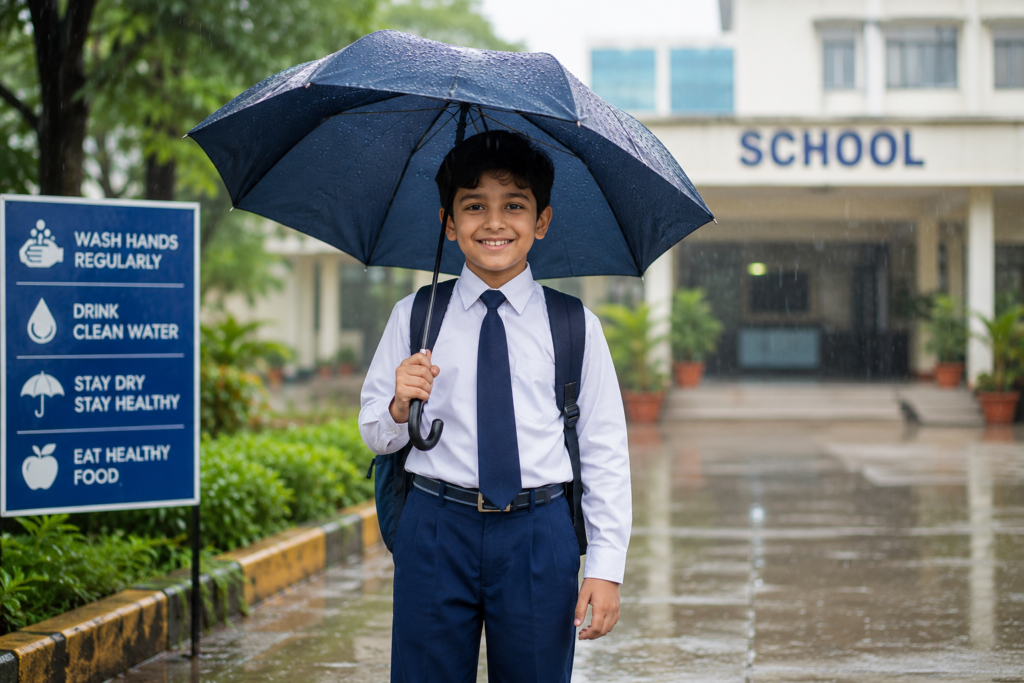
The first heavy rain of the season always feels like a relief after Ratlam’s summer heat. But ask any parent, and they’ll tell you the mood shifts fast — within a week or two, half the class is coughing, someone’s down with fever, and the school WhatsApp group is full of “sick leave” messages.
Monsoon in Ratlam isn’t just about umbrellas and wet shoes. It’s the season when children’s immunity is tested the most — waterlogged school routes, sudden temperature drops, humidity, and mosquito breeding all combine to make July and August the two toughest months for a child’s health calendar. The good news? Almost all of this is preventable with a few consistent habits at home and school.
Here’s a practical, no-nonsense guide for Ratlam parents to keep their children healthy, safe, and attending school regularly this monsoon.
Why Monsoon Hits Children Harder
Children’s immune systems are still developing, and their daily routine — playground time, shared classroom spaces, tiffin sharing, school bus rides — naturally increases exposure. Add in fluctuating temperatures (hot mornings, sudden downpours, damp evenings), and you get the perfect storm for seasonal illness.
The most common monsoon health issues among school-going children include:
- Viral fever and cold – spread quickly in classrooms through droplets and shared surfaces
- Stomach infections – often linked to contaminated water or food left out too long in humid weather
- Cough and throat infections – triggered by sudden wet-to-dry temperature shifts
- Mosquito-borne illnesses – dengue and malaria cases typically rise through July–September in Madhya Pradesh, especially around stagnant water
None of these are cause for panic — they’re simply part of the season. But being prepared makes the difference between a mild inconvenience and a week of missed school.
Building Immunity: What Actually Helps
Forget expensive supplements — the basics still work best.
1. Protein-rich, warm meals. Dal, eggs, paneer, and seasonal vegetables like lauki, tinda, and turai support recovery and keep energy levels steady. Avoid too much cold or leftover food during humid weeks.
2. Consistent sleep timing. A child who sleeps 9–10 hours a night recovers from minor infections far faster than one running on 6–7 hours, regardless of diet.
3. Hydration with boiled or filtered water only. This one habit alone prevents most monsoon stomach infections. Make sure your child’s school water bottle is filled from a trusted source every morning.
4. Handwashing before meals and after school. Simple, but still the single most effective barrier against viral spread in a classroom setting.
5. Vitamin C-rich fruits. Amla, guava, and citrus fruits are in season during monsoon and genuinely help — no need to look further.
The School-Day Safety Checklist
For parents dropping kids to school across Ratlam — whether Retired Colony, Indralok Nagar, or Jaora Road — here’s what actually helps on a rainy morning:
- Keep a spare uniform set and socks in the school bag on days with heavy rain forecasts
- Send a small towel — wet hair and clothes through a full school day is a common cause of colds
- Choose closed, non-slip footwear over sandals; wet floors and muddy school gates are a real fall risk
- Avoid walking or cycling through waterlogged stretches — Ratlam’s low-lying areas near nullahs can hide open drains after heavy rain
- Pack fever-reducing basics (paracetamol as advised by your paediatrician) in your home first-aid kit, not the school bag
- If your child shows fever, sore throat, or stomach upset — keep them home. One day of rest at the first sign prevents a week of illness and stops spread to classmates
What We Do at Morning Star During Monsoon
At Morning Star School, our monsoon protocol runs quietly in the background so parents don’t have to worry about it:
- Classrooms and corridors are checked daily for slip hazards and proper drainage
- Drinking water stations are cleaned and monitored more frequently during humid weeks
- Outdoor games and assemblies shift to indoor activity spaces on heavy rain days, so learning time is never lost
- Our staff are trained to spot early signs of fever or discomfort and inform parents promptly rather than waiting
This is part of a larger commitment we’ve written about before — you can read more about how we think about a child’s everyday wellbeing in our post on helping children settle into a healthy daily routine.
A Quick Home Checklist for July
Print this out or save it as a note:
- Umbrella or raincoat in the bag every single day, rain or shine
- Boiled/filtered water bottle, refilled daily
- Spare socks and a small towel during heavy rain weeks
- Home first-aid kit stocked and checked
- No stagnant water in coolers, pots, or terrace containers at home (mosquito breeding prevention)
- A consistent bedtime, even during the holidays-adjacent weeks
Final Word
Monsoon doesn’t have to mean a season of sick days. With a few consistent habits — good food, proper hydration, the right footwear, and knowing when to simply let your child rest at home — most families in Ratlam sail through July and August without major disruption.
If you’re evaluating schools for the year ahead and want to understand how we build these everyday habits into school life — not just academics — take a look at what makes our approach to a child’s overall growth different, or explore our facilities and interactive learning spaces built with safety in mind.
Admissions for session 2026–27 are open. You can start your admission enquiry here or reach out through our contact page for any questions.
Useful external references:
- India Meteorological Department – Ratlam Weather
- World Health Organization – Dengue Prevention Guidance