The first time you walk into a school to enquire about admission for your 3-year-old, it hits you differently.
It’s not like buying something. You’re not shopping. You’re standing in a place and quietly asking yourself — will my child be happy here? And honestly, most school brochures, websites, or even admission counsellors won’t answer that question for you.
This piece is written for parents in Ratlam who are at exactly that point right now — trying to figure out where to admit their child for Nursery or KG in 2026-27, feeling a little unsure, and wanting a clear, honest guide that actually helps.
Let’s get into it.
The Real Reason the First School Matters More Than Most Parents Realise
There’s a common belief among parents in Ratlam — and across India — that Nursery and KG are “just play years.” That it doesn’t matter much where you send a young child because real learning only begins from Class 1 or 2 onwards.
This thinking, while understandable, is something educators consistently see create problems later.
Research in early childhood development consistently shows that the ages between 2.5 and 6 are when a child forms their foundational relationship with learning. Not the content — the feeling. A child who experiences school as a safe, stimulating, and joyful place in those early years develops curiosity, language skills, and emotional confidence that carries forward for years.
A child who doesn’t — who finds school scary, chaotic, or boring at age 4 — can take years to recover that enthusiasm.
This is why the first school matters. Not because of which alphabets they teach or which rhymes they sing, but because of how your child feels walking through those gates every morning.
What Parents in Ratlam Are Usually Looking For — And What They Should Actually Be Looking For
When parents in Ratlam search for Nursery or KG admissions, most of them focus on a few common things: proximity to home, school fees, the reputation of the senior school, and whether any relatives or neighbours have already admitted their child there.
These aren’t wrong things to consider. But they leave out something important.
Here’s what truly matters for a Nursery/KG child’s experience — and these are the questions worth asking when you visit a school:
1. How do teachers handle a child who is crying or refusing to come in?
This is one of the most revealing questions you can ask. The first few weeks of school are often difficult for young children. The way teachers respond to that distress — with patience, warmth, and a calm approach — matters enormously. If a school’s answer is vague (“we manage it well”) or if you observe teachers pulling children firmly or raising voices during your visit, take note.
2. Is the classroom environment stimulating without being overwhelming?
Young children learn through play, colour, texture, and movement. A good Nursery/KG classroom should have dedicated areas for different activities — reading corners, art zones, sand/water play, building blocks. It should feel busy but organised. If it just looks like a miniature version of a regular classroom with desks and chairs, that’s a sign the school hasn’t invested in early childhood pedagogy.
3. What is the teacher-to-student ratio?
For children aged 3-5, individual attention is everything. A class of 35 children with one teacher is not early childhood education — it’s crowd management. Ask directly. A ratio of 1:15 to 1:20 is reasonable; anything higher for this age group deserves scrutiny.
4. How does the school communicate with parents?
In the early years, daily parent-teacher communication isn’t a luxury — it’s necessary. You should know if your child ate lunch, if they seemed upset, if they made a friend today. Good schools have simple but consistent systems for this, whether it’s a diary, an app, or a quick word at pickup time.
5. Is there a structured curriculum — or just controlled chaos?
Play-based learning doesn’t mean no structure. The best Nursery and KG programmes in schools across Ratlam follow a thoughtful daily schedule that blends free play, guided activities, language development, and physical movement. Ask to see a sample weekly plan. The answer will tell you a lot.
The One Mistake Ratlam Parents Make With Nursery Admission — Every Year
Waiting too long.
Admission season in Ratlam typically begins in January-February for the June academic session. But most parents only start seriously looking in April or May — after hearing from a neighbour that seats are filling up.
By then, the better schools have already conducted their rounds, shortlisted children, and are doing final confirmations. Late enquiries often end with disappointment.
If you are reading this in April or May 2026, please don’t wait another week. Check seat availability for Nursery and KG at Morning Star School directly — seats for the 2026-27 session are limited and filling fast.
Why Morning Star’s Nursery and KG Programme Is Different in Ratlam
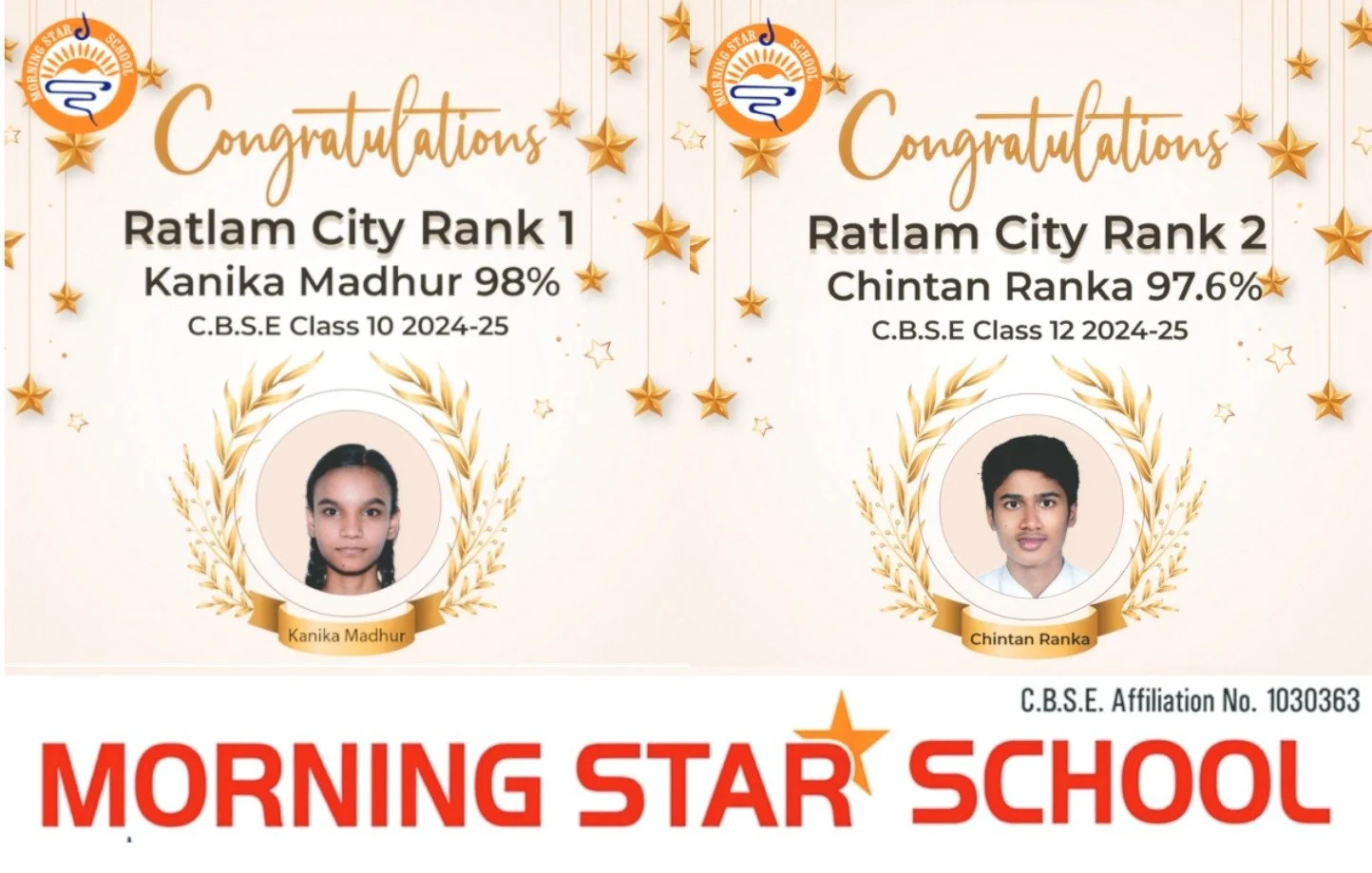
Morning Star School has been educating children in Ratlam for over 30 years. The school runs across three branches — Jaora Road (CBSE), Retired Colony, and Indralok Nagar — which means it has adapted its early childhood approach across different neighbourhoods and communities in the city.
What this experience brings to the Nursery and KG sections specifically:
A calm, structured environment. Morning Star’s early years classrooms are designed to ease the transition from home to school. The first weeks of every new session involve gradual settling-in activities, not abrupt routines. Teachers are trained to handle separation anxiety with patience — this isn’t just a policy statement, it’s something parents who’ve admitted children here consistently mention.
Language development from Day 1. With both English and Hindi integrated from Nursery onwards, children develop communication confidence in both languages naturally, without pressure. This matters greatly in Ratlam, where children come from homes that are primarily Hindi-speaking but need strong English foundations for academic success.
Activities that actually develop skills. From structured movement sessions to creative arts, the early years programme at Morning Star isn’t just about keeping children busy — each activity is tied to a developmental milestone. You can read more about the facilities and learning environment that support this.
Safety that parents trust. CCTV across campus, trained staff, and a campus layout that keeps younger children in a dedicated, secure zone — these aren’t afterthoughts. For a Nursery parent dropping off a 3-year-old for the first time, knowing the physical safety is taken seriously makes a real difference.
A Quick Note on Fees — What “Affordable” Actually Means
One thing worth saying plainly: cheap is not always affordable in the long run.
Parents in Ratlam sometimes choose a lower-fee school for Nursery, thinking they’ll switch to a better school from Class 1 or 2. What actually happens in most cases is that the child adjusts, makes friends, settles in — and changing schools becomes emotionally difficult for the child. The “temporary” choice becomes permanent.
Choosing a school where you’re comfortable with both the fees AND the quality — from Nursery itself — is better planning. Morning Star’s fee structure is available on the website so you can evaluate this clearly before visiting.
Before You Leave This Page — Do This One Thing
If your child is between the ages of 2.5 and 5, and you haven’t finalised a school for 2026-27 yet, take 2 minutes right now.
Visit Morning Star School’s admission form and fill in your basic details. It doesn’t commit you to anything — it simply puts you in touch with the admissions team, who will answer your specific questions about Nursery and KG availability, fees, and campus visits.
You can also walk in directly to any of the three branches in Ratlam. Seeing the classrooms, speaking to a teacher, and watching how the environment feels in person will tell you more than any website ever can.
Final Thought for Ratlam Parents
Choosing your child’s first school is not a small decision — but it also shouldn’t be a paralysing one.
Trust your instincts when you visit. Notice how the staff speak to children. Notice whether the place feels warm or institutional. Notice whether your child, if they come with you, seems curious or frightened.
The right school will feel right. And for a large number of families in Ratlam over the past three decades, that feeling has been Morning Star School.
Admissions for 2026-27 are open now. Don’t wait.